Sunday, 7 March 2010


Tuesday, 1 December 2009
Canada going off the deep end!
The Urgent Threat to World Peace is … Canada
Tuesday, 17 March 2009
Is it too late?
After a few days of a gloomy funk I decided that even so, I have a responsibility to future generations to limit the extent of the damage by continuing to work towards sustainability in my own life and to promote sustainability wherever I can.
That combination is key. As I improve my own carbon footprint in my own life I will choose methods that increase my resiliency and help me adapt to the warming world. At the same time, I increase my resiliency by helping others to do the same, as no man is an island. Resiliency depends on community.
But what about the governments of the countries I live in? The US, the UK, and Bermuda are all successful developed countries. What are they doing? What should they be doing?
As I am not as informed as George Monbiot on this topic I suggest you read this essay by Mr. Monbiot over at the Guardian.
If we behave as if it's too late, then our prophecy is bound to come true
Here is an excerpt;
"Until recently, scientists spoke of carbon concentrations - and temperatures - peaking and then falling back. But a recent paper in the Proceedings of the National Academy of Sciences shows that "climate change ... is largely irreversible for 1,000 years after emissions stop". Even if we were to cut carbon emissions to zero today, by the year 3000 our contribution to atmospheric concentrations would decline by just 40%. High temperatures would remain more or less constant until then. If we produce it, we're stuck with it.
In the rich nations we will muddle through, for a few generations, and spend nearly everything we have on coping. But where the money is needed most there will be nothing. The ecological debt the rich world owes to the poor will never be discharged, just as it has never accepted that it should offer reparations for the slave trade and for the pillage of gold, silver, rubber, sugar and all the other commodities taken without due payment from its colonies. Finding the political will for crash cuts in carbon production is improbable. But finding the political will - when the disasters have already begun - to spend adaptation money on poor nations rather than on ourselves will be impossible.
The world won't adapt and can't adapt: the only adaptive response to a global shortage of food is starvation. Of the two strategies it is mitigation, not adaptation, which turns out to be the most feasible option, even if this stretches the concept of feasibility to the limits. As Dieter Helm points out, the action required today is unlikely but "not impossible. It is a matter ultimately of human wellbeing and ethics".
Yes, it might already be too late - even if we reduced emissions to zero tomorrow - to prevent more than 2C of warming; but we cannot behave as if it is, for in doing so we make the prediction come true. Tough as this fight may be, improbable as success might seem, we cannot afford to surrender."
Thursday, 15 January 2009
Skating on Thin Ice
Here's an excerpt'
"The weather of the past few weeks would have been unexceptional in the early 1980s. Today it is being cited as definitive proof that manmade climate change can’t be happening. There’s a splendid example of such blithering idiocy here . Gerald Warner, writing in the Telegraph, contends that the cold snap lends more support to the idea of a new ice age than to global warming theory. Were he to apply this reasoning consistently, he would have to write another blog on Sunday showing that, due to the unseasonably warm temperatures the Met Office forecasts for the UK this weekend, global warming is definitely happening. And the following week, if there’s another cold snap, he should predict a new ice age again.
Faced with a choice between global temperature records covering more than a century, or three weeks of cooling in one small corner of the planet, Mr Warner chooses the second dataset to identify long-running global trends. Though he has evidently never read or never understood a peer-reviewed paper on this subject in his entire crabbed life, he then goes on to dismiss this whole canon of science as nonsense. Is there any other subject on which journalists can make such magnificent idiots of themselves and still keep their jobs?"
Read the rest of the post over at Celsias
Skating on Thin Ice | Use Celsias.com - reduce global °Celsius
Sunday, 2 November 2008
Free the Unborn!

This is not a post about right to life or abortion. This is another excellent article by George Monbiot over on Celsias.
Here's a quote from the text by Mr. Monbiot that should serve as a clue to it's overall content.
"Politics is the art of shifting trouble from the living to the unborn."
Free the Unborn! | Use Celsias.com - reduce global °Celsius
Posted using ShareThis
Sunday, 19 October 2008
Externalities?
As I've mentioned before on this blog I find George Monbiot to be especially perceptive on matters of the environment and as it turns our he is also well versed on matters relating to economics. Check it out:
This Stock Collapse Is Petty When Compared to the Nature Crunch
Thanks to Lamar Mitchell for the link.
Tuesday, 24 June 2008
James Hansen is the man! - Robb
He's dealt with the Bush administration's attempts to muzzle him and the truth he speaks.
He has remained a shining light of rationality and scientific veracity attempting to illuminate our dire situation for over 20 years.
He continues to draw attention to the folly of coal fired power plants as well as the failure of the IPCC to call for strong enough steps towards mitigation of climate change and resultant sea level rise.
He maintains that the safe level of Co2 in the atmosphere is 350ppm. We are now at 385ppm.
Yesterday he told congress that Big Energy executives who have waged a war of disinformation and caused delay in dealing with this issue, much the same as the tobacco industry blurred the connection between cancer and smoking, should be put on trial for crimes against humanity.
This puts me in the difficult position of disagreeing with George Monbiot who agrees with Hansen on most things but not that these executives should be prosecuted. See his article at the Guardian. Read his book Heat.
People will die as a direct result of human caused climate change, they are already dying in the poorest countries on earth due to drought, a large factor in the conflict in Darfur, brought on by global warming. Hundreds of millions will be facing drastic water shortages, and the conflict this brings, as the himalayan glaciers disappear, likely by 2030. Hundreds of thousands of Iraqi's, thousands of Americans, and over a hundred Brits have died due to our lack of response to our addiction to oil. Had we accepted our impact on the climate through our burning of oil back in 1988 as James Hansen suggested, we would likely never have gotten involved in a war for oil.
Until the developed world accepts that it's levels of consumption are destroying the foundations human survival and culture rest on we will continue to kill. We are not likely to accept it as a people as long as we are subjected to the sustained campaign of disinformation driven by the big energy companies. Even the US intelligence agencies view climate change as a security threat as reported on NPR.
I agree with James Hansen on this one.
Sunday, 22 June 2008
Small farms are better
from George Monbiot. Thanks to Dave Oxford for the link. Click on the word celsiasº above or the title of the post.
Friday, 20 June 2008
Quote from George Monbiot
Thanks to the Greenhorn website, the irresistible fleet of bicycles, where I found it. Increase your personal sustainability, find a way to purchase your food from small local non corporate non GM family farmers. Here's another tip, the animal agriculture industry does more harm to the atmosphere than all the worlds transport combined. Eat less meat! Particularly red meat and dairy. Pledge to have a meat and dairy free day once a week. Here's a link to a more detailed report on the topic from EarthSave


 Posts
Posts


.jpg)





I've seen others get bogged down in a single leg of the bottom line triad when they should know better, Economy (which seems to be the quicksand they all get stuck in) is no more important than Environment and Equity. Indeed, pursuing it at the expense of the other two is a false economy. 41p per kWH might seem alot but when you add up the fact that solar panels pay back the energy to make them within 2 to 5 years, are then completely carbon neutral, don't require huge inputs of water (unlike any thermal energy production including CSP), don't require continuing extraction of resources to provide energy (usually at the expense of local people), and if taken in the context of other electronic investments (when was the last time you heard of a TV with a payback period?) are a particularly good investment. I generally agree with Mr. Monbiot but I have to differ with him here.
At which point there was a post referring to solar PV systems as a a green version of timeshare and that scam merchants across the UK are taking advantage of well meaning greenies and trhat these systems will never payback the expense of their purchase to which I replied;
A lot of scam merchants are going around the UK selling television entertainment systems for thousands of pounds, this cost will never be paid back in the lifetime of the owner, nevermind the life of the electronic consumerist propaganda machine. When was the last time you got a savings on any bill from using your television more? When was the last time you heard of a television that was guaranteed to provide the service you bought it for, for the next 25 years? Quality solar PV panels will do both and in most cases will continue to produce power beyond the warranty period.
However, I would partially agree with your statement, Michael, about solar systems that are grid tied. These systems reinforce business as usual in many cases as they are designed as add ons to poorly designed inefficient houses and lifestyles. Research has shown that conservation only improves 10% or less after installing such systems. That is not to say that it can't be better and that grid tied systems can't play a role in reducing demand if properly designed and accompanied by rigorous conservation behaviour.
We must drastically reduce demand! YESTERDAY! We need systems that help us to do that....
IMHO, If you are serious about the "green thing", your best bet is to go off grid with as many circuits in your house as possible, build the PV battery system yourself, and carefully design it to enforce deep conservation of electricity to the point of being able to rely on the off grid circuits as close to 100% as possible. This strategy precludes consumerism of entertainment oriented electronics, electrically heated devices (which may require a complete green renovation of your house which you should do anyway), stand up fridge freezers, hair dryers, electric cooking, and generally wasteful behaviour. Having done this myself in the past and being in the midst of planning a project to do it on a much larger scale, I can assert that I am not naive, and that the savings (which includes the savings from not buying all the electrical devices you can't power as well as the savings from going DIY) will indeed pay for the system both in terms of finances and regarding the other 2 E's mentioned above. Admittedly, it will require the right site and enough panels to do the job and won't work for everybody but even if you take 1 circuit off grid it will be worth it as it reinforces a powerful ethic of conservation. It also gets you started with a small system that can be scaled up as finances allow. If you do this you will soon see that putting your money into self reliance is always a good investment.
There are scam merchants everywhere and folks need to look seriously at the suitability of their site and budget before embarking on such a plan.
Here another post queried the quality of solar PV particularly in comparison with nuclear power.
Here is my response.
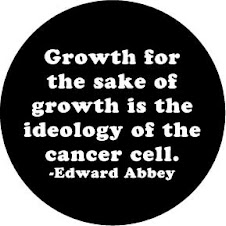
A good tool is as good as how well you use it. For me, an economy based on consumerism and endless growth is the problem. Any tool that helps us move away from that paradigm is worth using, tools that reinforce business as usual are not. A solar panel, or a wind generator for that matter, is a tool that gives a reliable amount of power and when coupled with a reliable storage system (based around 96% recyclable or better batteries) will do so for may years with near zero maintenance, power that is consumed within feet of where it is produced with minimal extraction of further resources (periodic battery replacement requires some due to the 4%). I don't know of another technology that is nearly so elegant. Intermittent, yes, requiring of mindful attention to our behaviour, yes. All it requires is that we use it properly, this means change. IMHO, It is the change that people are resisting.
My problems with nuclear are many; it requires massive inputs of carbon rich materials at the front end and the back end. It requires continuous use of minerals extracted from the earth in a very damaging way that requires massive quantities of energy rich water supply, and huge quantities of water are also required in the operation of the plant. Waste is clearly a continuing problem, as is security. Having said that if we are going to continue to strive for endless growth and consumerism it will require a massive base load supply, I favor nuclear over coal which has all the same problems but on a scale that is much worse (excepting perhaps security), I favor CSP (concentrated solar power) over both as it is based on the sun directly but has similar issues with water. I favor large scale deployment of wind farms over all of them.
I suspect that some combination of the two paradigms will be required; for me it is drastic reduction in demand through the deployment of off grid microgeneration to help people restrict their consumerism while at the same time replacing coal and nuclear with wind farms as we scale back grid supply, if this requires rolling black outs until we get our demand under control, so be it.
My personal philosophy is that if it doesn't further sustainability it is not worth doing.
"Nothing is less productive than to make more efficient what should not be done at all." -- Peter Drucker