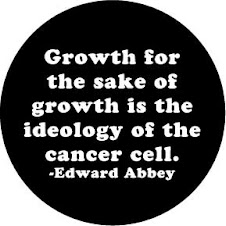
"...We need diversity. We need originals. Else-wise our culture will weaken and problems will be widely homogeneous, like mass obesity, children with brittle bones, mass home foreclosures, mass credit card debt...I truly believe a healthy culture has diversity on many levels.
If you're a parent, don't follow trends. My best advice to do is to yank the cable TV and dare your child to develop their personal inner interests. Our children really are truly individuals until commercials take hold of them. Let them decide what they enjoy and they will grow up to be originals, pioneers..."
Read the rest of this call to sanity at The Thrifty Chicks
Showing posts with label thrift. Show all posts
Showing posts with label thrift. Show all posts
Saturday, 26 December 2009


Monday, 28 September 2009
Wanna trade your excess produce from your veggie garden?
How'd your garden grow this season? Did you, like so many backyard veggie growers, end up with way too much of a particular crop? Tomatoes, Zuchini, melons? Here is a site that enables growers to connect and share, trade or sell produce. It's called Veggie Trader. Check it out.
Friday, 14 August 2009
Sustainable Fashion?
Sounds like an oxymoron to me but if anyone can steer us in the direction of sustainable fashion it has to be the Thrifty Chicks.
"Stop! You are being forced into a box and tied up neatly with string and a tag that says SEASONAL TREND. It’s mass marketing and it has you in mind left to ponder the exact bikini you will wear next summer of 2010, now on the eve of September, 2009. It tells you the skirt length this season. It tells you chartreuse is the new black.
Confused? Well of course you are! That’s why it is good to have an idea of fundamental style; something that can be molded into one’s own. Once you have a hand on the idea of the necessary basic foundation of a wardrobe you can add elements that meet contemporary trends without compromising your own unique self, your pocket book, or your dignity. The best part – these wardrobe essentials can be found at your local thrift store. Say no way to the department store Stepford wife keeping up with the Janets you must wear it because we said so style. The Thrifty Chick's idol, Audrey Hepburn was noted for admitting all she really needed for style was a scarf. Style is best served simple." - Thriftfully Modern Mommie
"Stop! You are being forced into a box and tied up neatly with string and a tag that says SEASONAL TREND. It’s mass marketing and it has you in mind left to ponder the exact bikini you will wear next summer of 2010, now on the eve of September, 2009. It tells you the skirt length this season. It tells you chartreuse is the new black.
Confused? Well of course you are! That’s why it is good to have an idea
 of fundamental style; something that can be molded into one’s own. Once you have a hand on the idea of the necessary basic foundation of a wardrobe you can add elements that meet contemporary trends without compromising your own unique self, your pocket book, or your dignity. The best part – these wardrobe essentials can be found at your local thrift store. Say no way to the department store Stepford wife keeping up with the Janets you must wear it because we said so style. The Thrifty Chick's idol, Audrey Hepburn was noted for admitting all she really needed for style was a scarf. Style is best served simple." - Thriftfully Modern Mommie
Saturday, 20 June 2009
Does your TV watching drive needless consumerism?
I've noticed that many folks will economize on many things, used cars, used computers, clothes lines instead of dryers, but when it comes to television only the latest and greatest will do. Why is this?
Perhaps folks are using home entertainment to supplant going out, perhaps it is simply a more effective and efficient means of escape when the screen is 50" across and accompanied by surround sound. In any case this insatiable need to have an incredible television is consumerism at it's most pernicious. The TV after all is the most direct conduit into the home and into your brain for endless marketing and propaganda designed to keep us consuming and complacent. This doesn't have to be the case. Check out this excerpt from a story at The Thrifty Chicks, read the rest of the story there;
"We don’t have the money or the desire to race out to some superstore and purchase the latest generation of television. To my family, television is television. It’s not an experience. We don’t have cable. We’re very predictable; PBS, CBS Sunday Morning with Charles Osgood, 60 Minutes and maybe an evening show if we’re too dog-tired to read to the kids. 60 Minutes comes from my childhood with my grandfather and we would watch Mutual of Omaha’s Wild Kingdom beforehand. Now my girls and I watch PBS’s Nature after 60 Minutes. Good to know that some things stay roughly the same they just might get shuffled about.
My husband, Mr. Golightly, quickly solved our problem. He took a television he’d bought at a thrift store for $20 a few years back from his garage workshop and replaced the toasted telly. He likes to watch football games while he does manly things that involve power tools which occasionally result in stitches in this workshop.... My grandparents just replaced their clothes washer of over thirty years. In the last ten years, I’ve gone through three. Things are wickedly wrong. How can we feel so at ease tossing huge things like clothes washer/dryers, televisions, PC monitors over our shoulder and buying more just to add that to the waste stream in a few short years?
I’m not so certain that the super stores that worked on making items “more affordable” to the public did us much a favor. Based upon my personal experience, I have the firm impression that a cheap price on the new goods market translates to poor quality. Add to that the constant turnover of product and I must wonder if we are we actually paying a higher economic and environmental cost in the long haul. I think we are and that makes me think that cheap is ultimately steep." - Shopping GoLightly
Thursday, 7 May 2009
Eat cheaply, eat nutritiously and sustainably.
It has long mystified me that those with limited income to spend on food choose to spend it on junk food; soda's, processed foods, anything with high fructose corn syrup in it, white breads, and fast food. You would think investing in nutrition; fresh, seasonal, and organic food, makes more sense. You can purchase and eat less because the food you eat is so much more nutritious. The paradox is that the poor in America tend towards obesity and have high rates of diabetes due to these food choices. I believe this behaviour is down to intentionally deceptive media and poor nutrition education. Here is a story over at Organic Consumers Association about a couple that tried to exist on the government food stamp minimum while eating only SOLE food; that's sustainable, organic, local, or ethical food.
"Siobhan Phillips proves that eating sustainably and ethically can be done on a budget - even on a seriously limited budget. She and her husband embarked on an experiment to eat only SOLE foods - sustainable, organic, local or ethical foods - "on the government-defined, food-stamp minimum: $248 for two people in our hometown of New Haven, Conn." Even more courageously, the two started this experiment with bare cupboards!
No, Siobhan didn't go on an all-vegetarian diet - though she did have to pass on the grass-fed steak. "Instead, I bought a small free-range chicken for about $9 and a scant pound of local ground beef for about $6, knowing that this, along with some sustainable canned fish, was our allotment of animal flesh for four weeks." That meant she really, really had to stretch the chicken, not only using up every piece of meat but also saving the fat and boiling the bones for broth.
But by buying dry beans in bulk, baking her own basic bread, and discovering thrifty cookbooks and international cuisine, Siobhan got to have her Chinese fried rice and Italian risotto and spicy biryani and eat them too. She says it didn't take much more time than usual - and she didn't have to give up her morning cup of organic fair trade coffee or fair trade cocoa desserts either.
Siobhan says her method won't work for everyone: "I relied on the sort of reasonably flexible schedule that is a luxury in far too many households, and I started with some basic cooking knowledge." But they sure sound like they'd work for me - and many other MNN readers. Read her article for more details on her frugal and tasty ethical eating - which she says she plans to stick to - save for the occasional pepperoni pizza."
Saturday, 30 August 2008
Is being green so hard?-By Robb
Over on celsias.com there a thread starting up about the difficulties of "Being Green"
It includes some good points and worth a read. I don't mean to deny that change isn't difficult but I think it needs to be put in context. The degree of change we, in the developed world, need to make are actually pretty minor compared to the level of change demanded of those on the front lines of climate change. I wonder, what do the citizens of Tuvalu think? Here is my post on the topic.
What's so hard about living an intentional life? For me it's simple, "being green" is about using less of anything produced with fossil fuels, being more self sufficient in as many ways possible, and helping others to do the same. It's the difference between being a citizen and being a consumer.
There is a well known mantra I try to live by at all times and I don't find it a hardship, REDUCE, REUSE, RECYCLE, with heavy emphasis on REDUCE.
"Being green" appears much less difficult than being an environmental refugee, starving to death, or drowning, all increasingly likely outcomes for billions of people, even those of us in the developed world, if we continue to consume fossil fuels.
Any action that reduces use of fossil fuel matters, the more the reduction, the more it matters.
For the citizens on the move in India due to the recent unprecedented flooding, those that didn't drown, a massive and immediate lifestyle change is required now. Right Now! No choice in the matter, no pondering how difficult it is, to survive it must be done.
We here in the developed world have the luxury of a continuum of change. It generally isn't forced upon us by calamity, though the citizens of the ninth ward in New Orleans might disagree. For instance, I personally have reduced my flying by over 60% per year in the last two years as I have come to understand it's impacts. Next winter's visit home I hope to be the last time I ever step foot on an airplane. After that I will travel by sea. It took effort, a bit of soul searching, some compromise with my family, and perhaps has been the most "difficult" aspect of my personal continuum of change. I know many people that have already sworn off flying for good, one man I know has not flown in 18 years. Not driving more than once every 2 weeks, not eating fast food more than once a month, not leaving devices on standby, drastically cutting meat eating while drastically increasing my consumption of organic food, changing all my lightbulbs to CFL's, buying only used clothing, growing as much of my own food as possible, staying out of debt to maintain flexibility, the list of actions grows and all are on some sort of continuum.
This is the luxury I have, this is to some extent the luxury I have created. Guilt comes from not doing these things, frustration is eased by understanding that the continuum is a necessary part of transition, and enthusiasm is not "dead of a thousand cuts" rather it flourishes on the life giving blood of a thousand efforts.
We have less than 10 years to get our emissions under control, do we have the luxury of the easy?
Wednesday, 27 August 2008
Free from Power Day
A monthly holiday in celebration of simplicity
This is an opportunity to express your willingness to consume less power in the form of electricity, fossil fuels, and products reliant upon them. It is also, a declaration of independence from the power of consumerism and media.
With a simpler life comes time to spend with loved ones, to exercise, to meditate, to work in the garden, to observe the rhythms of nature. With diligence you will discover how preferable is a life uncluttered by the superfluous trappings of the cult of consumerism.
By making this a monthly commitment you are more likely to adopt some level of these changes in everyday life than if it was less frequent, it stands to reason that adopting this action once a week, should you so choose, would be even more effective.
Thus on the first Saturday of every month:
1. Freedom from the power grid for entire day. Zero personal use of electricity delivered via the national grid.
2. Freedom from the fossil fuel use grid. Zero personal use of fossil fuels, no cars, buses, planes or trains fueled by fossil fuels. No cooking using fossil fuels or refridgerated food. No bathing or showering unless from rainwater heated renewably.
3. Freedom from Consumerism and media. No shopping, banking, television, radio, mp3, cell phone, land line phone, computer, or printed media usage.
This action developed out of a group discussion on the celsias.com thread started by John P. called “Can our economy grow forever?”. Everyone who commented on that thread has contributed to it’s development.
Thursday, 31 July 2008
An old idea fits the new problem - by Robb


I found these posters at the Northwestern University website
I think they are completely relevant to the mindset we need to address the challenge facing us. Rather than encouraging more overconsumption of pointless gewgaws with an "economic stimulus" handout. Perhaps the government of the US should look back at the wisdom of times gone by and discuss frugality, thrift, efficiency, and living within our means. What the US accomplished in an extremely short time to win that war needs to be the model for the effort required now.
I remember seeing billboards in the south when I was young extolling drivers to slow down, they said "Speed on brother, Hell ain't half full!". A perfect encapsulation of the current economic model.
Subscribe to:
Posts (Atom)


 Posts