Hello all. I was asked to put together an Earth Day service at our UU church and today it was delivered, including the following sermon.
Carbon Karma
The Guaymi, the Kayapo,The Beaver Lake Cree,Child soldiers of the Congo, the Inuit, the Ogoni, our neighbors our brothers and sisters. Remember these for Earth day.
I took refuge as a Buddhist in the early eighties and I have been a sporadic practitioner ever since. Over the last ten years, as I studied climate change and sustainability, I began to consider my own karma in a new way, I call it carbon karma.
The Buddhist concept of karma has to do with how one is reborn as a consequence of how one has lived. If I am selfish, grasping , or cruel I could end up being reborn as an insect, an opossum, or even a human, but lacking the basics of a life of dignity, doomed to suffer and die at a young age perhaps. Eventually, this negative karma gets worked out thru successive lives and hopefully I am born as a human with all the advantages of comfort, education, health and most importantly, the luxury of options. And if am really lucky, exposed to the dharma, buddhist truth, and thereby have the potential to escape the suffering of rebirth all together by becoming enlightened. I might even choose to dedicate myself to compassion and remain in the world of samsara to work for the enlightenment of others, becoming a bodhisattva.
About the same time as I was becoming a buddhist I began to dance around the edge of radical environmentalism; no compromise in defense of mother earth, rednecks for wilderness and the like. Meanwhile the environmental movement was evolving. From it's roots with Aldo Leopold, Rachel Carson, and David Brower, it began to reflect the deep ecology of Arne Naess, accepting and proclaiming the equal rights of all species, to the Eco feminism of Delores LaChapelle, which helped to enshrine social justice in the movement. Indeed, social justice and environmentalism had merged. A good example of this are Permaculture's central principles of earth care, people care, and fair share.
My own journey was somewhat different, in my mid to late twenties, I felt, incorrectly as it turns out, that the civil rights movement had dealt with all this social justice falderal and what I wanted to do was tree sit, monkeywrench, and caltrop logging roads. But alas, my timing was all wrong, my patron saint, Edward Abbey, was dead, the FBI had infiltrated Earth First, arrested its founder, members car bombed, and the radicals I met at the earth first gatherings were justifiably paranoid. So, I decided to go climbing instead. My activism was internalized. I learned to live just simply enough to pay for my climbing habit. I fancied myself a radical vegetarian, treehugging, mountain goat, cycle commuter.
Living in the pacific northwest at the time, I wandered through the few remaining old growth forests whenever I got the chance, I never stopped hugging trees. But all the while I suspected I was kidding myself, something didn't add up. In the words of William Wordsworth,
The world is too much with us; late and soon,
Getting and spending, we lay waste our powers;
Little we see in Nature that is ours;
We have given our hearts away, a sordid boon!
This Sea that bares her bosom to the moon,
The winds that will be howling at all hours,
And are up-gathered now like sleeping flowers,
For this, for everything, we are out of tune;
I was out of tune; I had a nice car, a state job with excellent benefits, a career in the arts, traveling all over to climb. I owned lots of toys; bicycles, racks of climbing, camping, skiing, snorkeling and surfing gear. How could I be so down on the consumer when I was collecting stuff as fast as I could? Getting and spending I was laying waste to my powers. I had become that which I disdained. A consumer first, a global citizen second. My carbon footprint, was huge. I had to admit it, I was personally responsible for climate change.
There is a principle called phase cancellation used to create noise canceling headphones, whereby a sound can be cancelled by producing a mirror image of that sound at the same volume. I think of my efforts to cut my carbon footprint rather like that. A ripple of good canceling out a ripple of bad. Unfortunately I was canceling merely the xylophone part in my own grand symphony of consumerism. My efforts were as a counteracting ripple in an ocean, momentary and soon invisible amongst the raging sea of getting and spending.
Abruptly, my life changed, on a climbing trip east of the cascades I met Jacqui. Within a few years, I was living a new life in the tiny island nation of Bermuda. Initially, with increased income came increased consumerism, my carbon footprint soared, quite literally as we constantly flew on and off the island.
Living on a island in the middle of the Atlantic that is too small to provide almost anything local to its residents requires massive inputs of fossil fuels. Most of the food comes from all points of the compass across thousands of miles of ocean. The electricity, despite an abundance of wind and sun, is generated by burning oil and trash, and because of the high per capita income, the conspicuous consumption is astounding. The island is only 21 miles long but even with an excellent mass transit system, the roads are choked with very expensive cars, driving very slowly.
But Bermuda's isolation had left it with one shining legacy, harvesting rainwater. It has become a high art and is required by law, as there is no native fresh water source other than rain. When I understood how an such an affluent country could still provide most of its water in a completely sustainable way I was gobsmacked. Bermuda is a microcosm of the planet at large, highly dependent upon the squandering of precious resources while situated amongst a field of plenty. Yet for most of it’s history, quite capable of gathering all the fresh water they needed merely from the rain.
The cost of living is proportionate to the per capita income. After two years of paying exorbitant rents and sky high utility bills, I finally talked Jacqui into buying a boat, sailing it across, and living aboard. Suddenly, we were living off grid, rent and utilities free. We had solar panels, a wind genny, and a backup generator. My carbon footprint, finally, after years of excess, began to fall. I began sense that my ripples were now calming someone else’s storm instead of my own.
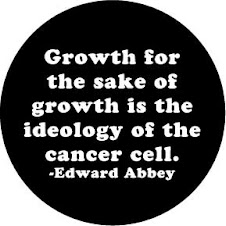
But was it enough? Living this way I might influence a few to move in a positive direction but we clearly needed more than that. Government and the businesses that control it have no incentive to change until their profits are threatened. Eventually, Bermuda learned that endless growth is an impossibility, even if they are still unwilling to verbalize that. With limited electrical generating capacity and every square inch of the island worth so much money, there was not going to be more fossil fuel powered generation. There is no where to put it. When the island suffered blackouts due to excessive air conditioning, they got worried, would international finance want to stay on the island if infrastructure was failing? So, the rhetoric was stepped up, a sustainability commission convened, foreign consultants hired, recommendations made and slow progress began to appear.
This didn't happen because some mass movement of the populace demanded it. The percentage of the population who have implemented even significant efficiency gains is still small. This happened because government and business saw it as a threat to their power and profit base, and they delayed it till the last minute. Sound familiar?
Kenneth Bolding environmental advisor to JFK said “Anyone who believes in indefinite growth in anything physical on a physically finite planet is either mad or an economist”. This is the way of it, Bermuda exists in isolation surrounded by open sea, our planet exists in isolation surrounded by the vacuum of space. Due to its isolation and size Bermuda is perceiving its limits directly. Our planetary isolation is absolute but due to its size we are able to ignore the edges we are racing towards. But the world is finite, the resources it contains are reaching their limits. We ignore, at our peril, the simple fact that every single thing we do as creatures on this earth relies upon a functioning healthy ecosystem. As the founder of Earth Day, Gaylord Nelson said," the economy is a wholly owned subsidiary of the environment. "
At the WTO protests in Seattle, an oil executive told Anita Roddick, the founder of the Body Shop, that what they fear is not governments, they control them, no, what they really fear is a consumer revolt. When enough of us have effected change in our own lives this will begin to impact on business and thus government. As long as they see that we are unwilling to personally do what is necessary, they will be be unlikely to take us seriously. Some would argue that the situation is too urgent to wait for that level of personal change to become widespread and I would agree. We need change, serious change, and we need it yesterday.
So where does that leave us? Let's go back to the idea of karma. If I make my living exploiting the poor, say I own sweat shops, or unjustly treat migrant laborers, many here today would agree, this would damage my karma. So please consider this. Our excessive lifestyles in the global north are dependent upon resources from the global south, mostly procured at the expense of the poor, or the local environment, or both. The carbon footprint of this resource extraction is quite literally changing our planet, into one that is inimical not just to civilization but biodiversity itself. Our behaviour as consumers is inextricably linked to a myriad of social justice issues as well as directly responsible for climate change and degradation of the biosphere. This is due to our almost complete reliance on fossil fuels to provide the energy for transportation, for extraction, and manufacturing, the energy for wars of imperialism or to prop up authoritarian regimes, the energy to enact massive environmental destruction such as deforestation, strip mining of minerals, tar sands and coal, the energy that industrial agriculture relies upon, energy to create modern medical miracles, energy to make a Hummer or a Prius. It is the energy we rely upon to create our modern lifestyles. To put it more succinctly, behind every gram of carbon dioxide emitted when we burn fossil fuels is a long chain of corruption, leading to exploitation, environmental devastation, and war, and ahead of it, not unlike some radioactive half life, lie the dark challenges of climate change. So, by addressing our carbon karma we are addressing our spiritual karma, but we are also effecting change, demonstrating that a low carbon lifestyle is not scary, not expensive, not even uncomfortable or inconvenient. Indeed it is frugal, inexpensive, and as I wrote this with my bare feet toasting in front of the wood stove, quite cozy and comfortable.
Now, I must apologize for treading into difficult and unpleasant terrain. Albert Schweitzer said “The purpose of human life is to serve and to show compassion and the will to help others.” Compassion, the root of becoming a Bodhisattva, the teaching at the heart of so many of the worlds religions. Can compassion be expressed and karmic merit gained through living a more sustainable life? I think the people I mentioned at the start of this talk would say so.
Do you remember them? Child soldiers in the Congo are used to fight wars to control mineral resources, like the rare metals that went into making this iPad. The Guaymi of Panama are struggling to avoid paying the ultimate price of our demand for copper that allows the electrification of my home. The Beaver Lake Cree are losing their rights to the boreal forests of Alberta and receiving a payment of higher rates of cancer, polluted water and air, all due to the tar sands development to produce the oil with which I drove here today. The Kayapo of the Amazon who in the face of increasing deforestation, diseases brought on by loggers, farmers, and now dam builders are fighting to survive by struggling to maintain control of their ancestral lands. This so the rainforest hardwoods can be sold to rich northerners or so that cattle can be grazed or soybeans grown, where once healthy forests stood.
And the Ogoni of the Niger delta, probably the most exploited tribe in Africa. Living in the toxic stew of gas flares, oil spills, and corruption brought on by the theft of the oil beneath their lands. Their struggle for earth care, people care, and fair share became well known when Ken Sarawewa, an Ogoni poet and activist was hanged for having the temerity to oppose Shell Oil in a non violent way. Again, so that we in the north don't have to pay too much to drive to the mall. The Inuit are losing their entire way of life in the arctic due to rising sea levels and lowering ice quantities, a result of global warming which can be blamed on, well, all of the above. All these indigenous peoples have had to watch their rights, their culture, even their lives, threatened or destroyed by our rapacious appetite for cheap consumer goods. But you can find the victims of our addiction to consumerism right here in America, just do a little research into the coal industry.
And what do we really need all that stuff for anyway. It doesn't make us happier, it doesn't make us more secure, in fact it does the opposite in both cases. For an excellent expose on this topic, with scientific fact and spiritual teaching to back it up, I recommend the books Affluenza and Simple Prosperity by David Wann.
But this is heavy stuff for a lovely Sunday morning, let’s pause, take a deep breath and clear our minds.
Perhaps this is a good time to bring up another very important buddhist teaching, Buddha nature. We are all buddhas, all sentient beings share that shining gift, it is merely obscured. The lesson here is that we should not allow our nature as consuming humans in a modern society, to stimulate a guilt trip. I’m no therapist but I have learned from bitter experience that dwelling on my failures is not progress, indeed it is further obscuration.
To paraphrase Pema Chodren, we must rejoice, not only in our steps forward but also in our steps back. And I say, rejoice in an obvious way. Smile, that we have the wisdom to see that we are not living as green a life as we could be. Smile, that we are so fortunate to have a neighbor further along the path, there to show us another way to step forward, maybe not today, maybe next year. Smile, to know that our essential buddha nature becomes that little bit less obscured, if we allow it, with every mindful step, either back or forward. In Buddhism, the point is not to dwell on suffering but on the ways to reduce suffering. Dwelling on guilt and anger does not help. We can have faith in our buddha nature, in our ability to transcend, to change and in the benefits of change.
But are we all buddhists? Not likely, nor should we be. If you aren't comfortable with the Buddhist concepts of karma and buddha nature, you can find edicts in every other faith that require us to do as Jesus, or Mohammed, or Baha’Ullah would do, to look after each other and creation, from the ten commandments to the most elegant and simple of them all, the golden rule, do unto others as you would have them do unto you.
I believe we are called to make our lives more sustainable for many reasons, to reduce our carbon footprint and thus our impact upon each other, to leave a verdant rich planet to our nieces and nephews, and to preserve biodiversity, the web of life. In the words of St Francis "If you have men who will exclude any of God's creatures from the shelter of compassion and pity, you will have men who will deal likewise with their fellow men."
Or to look at it more anthropocentrically, we are called to make these changes to reduce our impact on our fellow humans, including our family members and our selves, to align our own daily existence with the requirements of our faith, whatever that faith happens to be. To quote Joel Salatin, the farmer and spokesman for sustainable agriculture, "part of our responsibility as stewards of the earth is to respect the design of creation."
I'd like to wrap up with another quote from St. Francis,
"Start by doing what's necessary; then do what's possible; and suddenly you are doing the impossible. "
Happy Earth Day


 Posts